
The 8 Sensory Systems That Support Learning and Behavior
Most People Learn About 5 Senses…
But We Actually Use 8
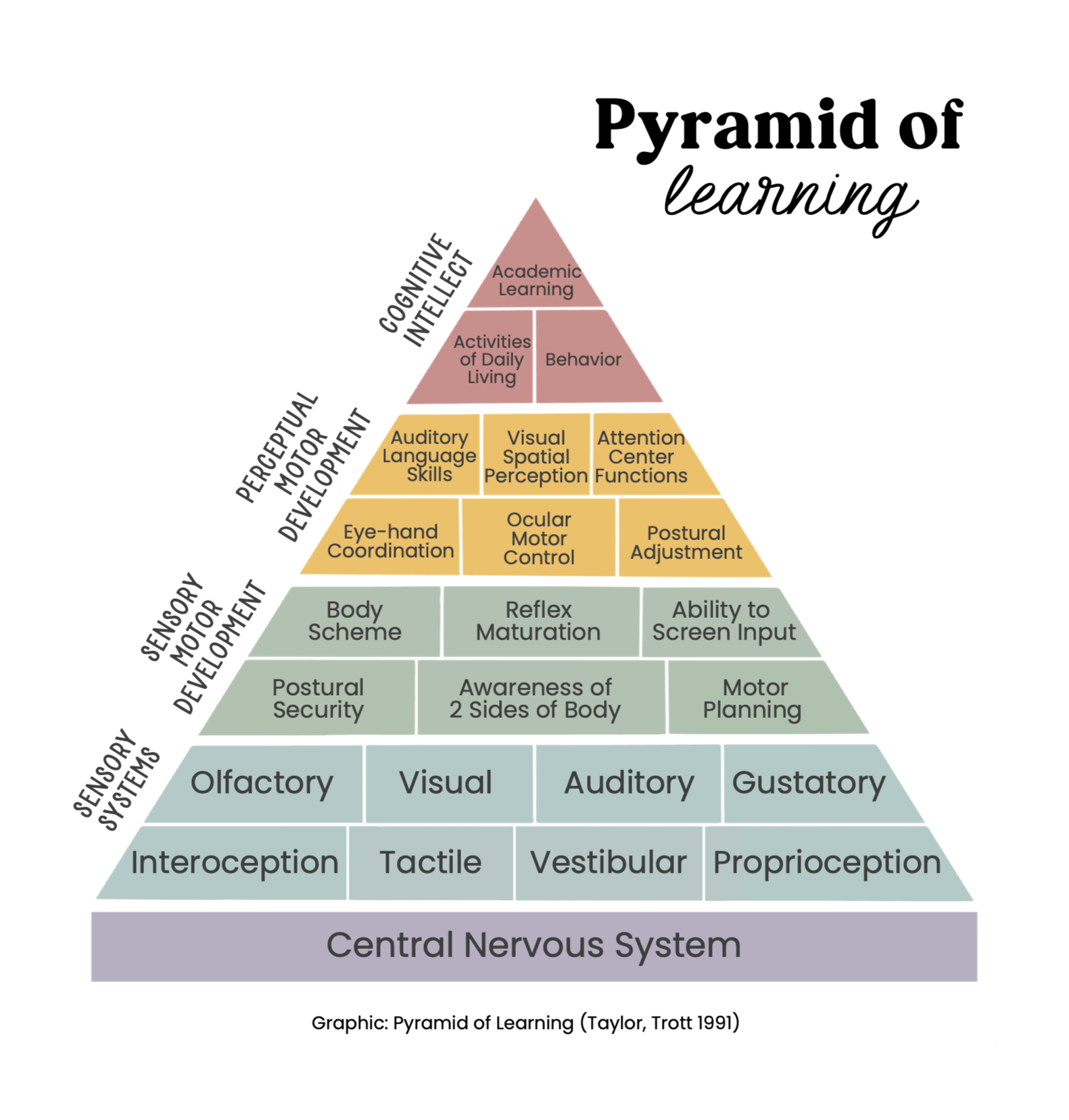
Children actually rely on eight sensory systems to understand and interact with the world: tactile, vestibular, proprioception, visual, auditory, olfactory, gustatory, and interoception. These systems form the foundation of development in the Pyramid of Learning, supporting body awareness, coordination, attention, emotional regulation, and academic learning.
Most of us grew up learning about the five senses:
sight
hearing
smell
taste
touch
These senses give us information from the environment. However, child development and occupational therapy research show that three additional sensory systems are essential for learning and behavior. These three additional senses give us information from inside our body. The vestibular system is our sense of balance from our inner ear. Our proprioceptive system is our sense of body awareness through our muscle and joint receptors. Our interoceptive sense is our body signals for hunger, thirst, tiredness and need for the bathroom.
Children actually rely on all eight sensory systems that work together to help them:
move their bodies
regulate emotions
pay attention
develop coordination
succeed in school
In occupational therapy, these systems form the foundation of the Pyramid of Learning, which explains how sensory development supports higher-level skills like behavior, attention, and academic learning.
The base of the pyramid contains the sensory systems because they provide the neurological foundation for everything that comes later.
Let's look at each of these eight sensory systems.
The 8 Sensory Systems
1. Tactile System (Touch)
The tactile system processes information through the skin.
This system helps children understand:
texture
temperature
pressure
pain
touch
Healthy tactile processing allows children to explore their environment and feel comfortable interacting with objects and people.
When tactile processing is difficult, children may:
dislike clothing tags or certain fabrics
avoid messy play
resist haircuts or tooth brushing
become easily irritated by touch
2. Vestibular System (Movement and Balance)
The vestibular system is located in the inner ear and helps control:
balance
head position
movement
spatial orientation
This system plays a major role in postural control, coordination, and attention.
Children with vestibular challenges may:
seek constant movement
have difficulty sitting still
avoid playground equipment
struggle with balance activities
The vestibular system is one of the most important systems for attention and regulation.
3. Proprioception (Body Awareness)
The proprioceptive system provides information from muscles and joints about where the body is in space.
It helps children:
grade force
control movements
coordinate muscles
develop body awareness
Children with proprioceptive challenges may:
break toys accidentally
use too much or too little force
appear clumsy
seek crashing, jumping, or squeezing activities
Proprioception plays a major role in self-regulation and calming the nervous system.
4. Visual System (Sight)
The visual system allows children to interpret and process what they see.
This system supports skills like:
reading
copying from the board
handwriting
visual attention
spatial awareness
Difficulties in visual processing may cause challenges with:
handwriting
reading fluency
puzzles
visual tracking
5. Auditory System (Hearing)
The auditory system processes sounds and spoken language.
This system helps children:
understand instructions
follow conversations
process classroom information
develop language skills
Children who struggle with auditory processing may:
appear distracted in noisy environments
need directions repeated
struggle to follow multi-step instructions
6. Olfactory System (Smell)
The olfactory system processes smells through receptors in the nose.
Although it receives less attention, smell can strongly influence:
memory
emotional responses
food preferences
environmental awareness
Some children are extremely sensitive to smells and may avoid environments with strong scents.
7. Gustatory System (Taste)
The gustatory system allows us to taste food and detect flavors.
This system works closely with smell and plays a role in:
food preferences
feeding development
oral sensory experiences
Children with sensory differences may be:
extremely selective eaters
sensitive to textures
resistant to trying new foods
8. Interoception (Internal Body Awareness)
Interoception is often called the hidden sensory system.
It helps children understand signals coming from inside the body, including:
hunger
thirst
fatigue
pain
emotional states
Strong interoception helps children recognize feelings and regulate emotions.
Children who struggle with interoception may:
not notice when they are hungry or tired
have sudden emotional outbursts
struggle to identify feelings
How These Systems Support Learning
According to the Pyramid of Learning, these sensory systems form the foundation for development.
When these systems work together effectively, children can develop:
body awareness
coordination
motor planning
attention
emotional regulation
These skills then support higher-level abilities like:
handwriting
classroom learning
daily living skills
behavior and self-regulation
When foundational sensory processing is difficult, children may struggle with the skills that appear higher in the pyramid, including attention, behavior, and academic tasks.
How Occupational Therapy Helps
Pediatric occupational therapists specialize in helping children strengthen the sensory and motor foundations needed for learning.
Therapy may address:
sensory processing
body awareness
motor planning
emotional regulation
coordination
Through play-based activities, children develop the skills needed to feel more comfortable in their bodies and participate successfully at home and school.
If your child struggles with attention, coordination, emotional regulation, sensory sensitivities, or behavior, sensory processing may be playing a role.
At Peak Occupational Therapy, we evaluate the foundational sensory and developmental skills that support learning and regulation.
Contact us today to schedule an evaluation and learn how occupational therapy can support your child’s development
