
Proprioception in Children: Why Some Kids Crave Jumping, Crashing, and Rough Play
What Is Proprioception?
Proprioception is the sensory system that tells the brain where the body is and how much force the muscles are using. Children who have difficulty processing proprioceptive information may use too much or too little force, appear clumsy, or seek intense activities such as jumping, crashing, pushing, and climbing. Occupational therapy can help children improve body awareness, movement control, and overall sensory regulation.
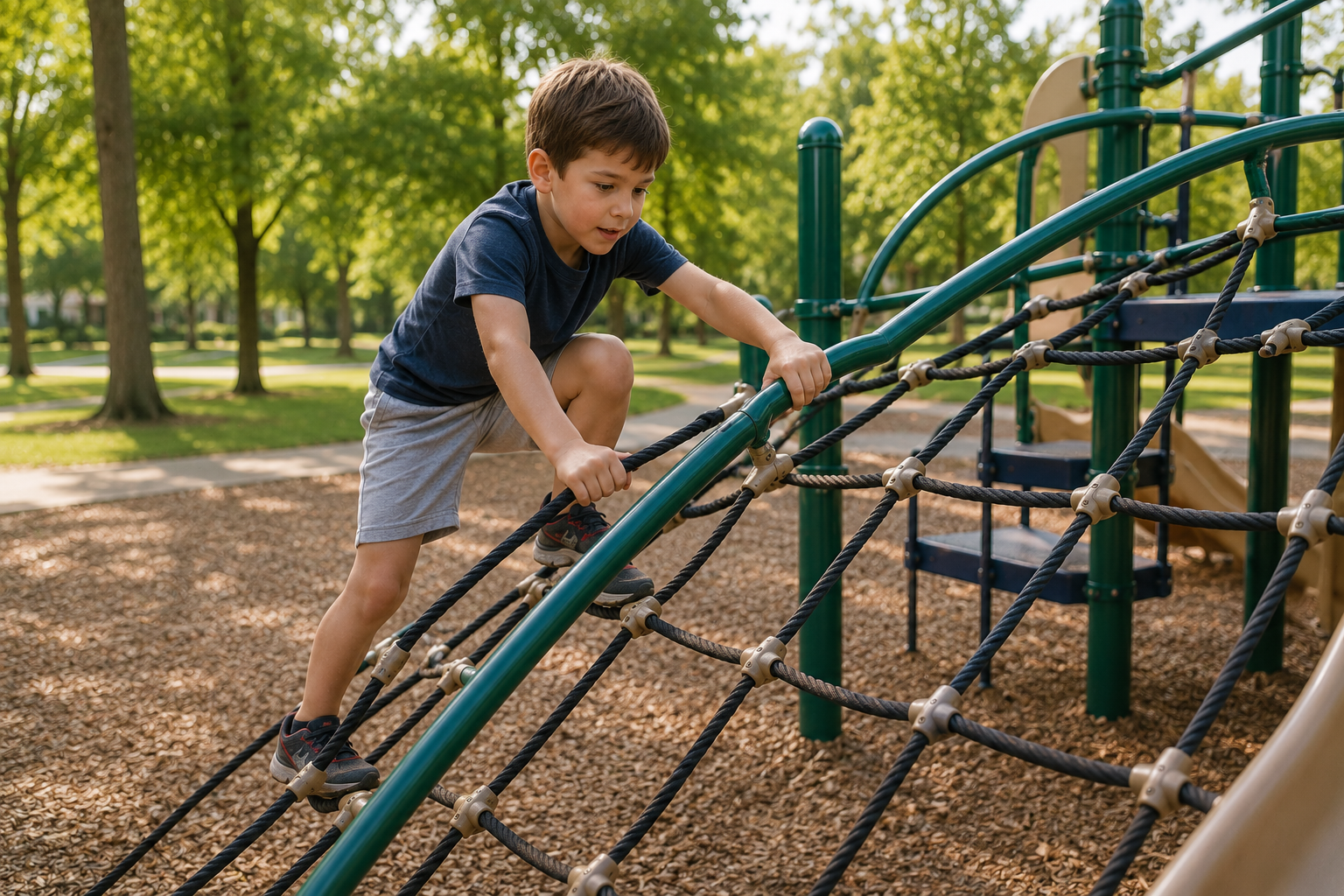
Does Your Child Seem to Need More Movement, Pressure, or “Heavy Work”?
Does your child:
Crash into the couch over and over?
Jump whenever there is something available to jump from? Or jump instead of walk?
Play more roughly than other children?
Hug people too tightly?
Break crayons or toys without meaning to?
Slam doors or push too hard?
Love wrestling, climbing, pushing, pulling, or carrying heavy things?
Parents sometimes describe these children as rough, wild, clumsy, or constantly on the go. But there may be more happening underneath the behavior. Your child may be seeking information from a sensory system called proprioception. Proprioception is one of the eight sensory systems children use to understand their bodies and the world around them. It works together with the other sensory systems to provide an important foundation for body awareness, movement, coordination, self-regulation, and learning. If you're new to sensory processing, you may want to start with our guide, The 8 Sensory Systems That Support Learning and Behavior in Children, which explains how all eight sensory systems work together.
How Does Proprioception Work?
Receptors in our muscles, joints, and tendons continuously send information to the brain about what our bodies are doing. Thanks to proprioception, you can close your eyes and still know whether your arm is above your head or resting beside you. You don't have to watch your feet every time you walk, and you can adjust how firmly you hold a paper cup compared with a heavy water bottle. Your brain is constantly receiving proprioceptive information—even though you probably aren't aware of it. For children, this sensory information is essential for developing a strong sense of where their body is and how to use it effectively.
Why Is Proprioception Important for Children?
Proprioception contributes to many skills children need throughout the day.
Body Awareness
Proprioceptive information helps a child know where different parts of the body are without having to look at them. This is important for everything from navigating the playground to putting an arm into a jacket sleeve.
Grading Force
Proprioception helps children determine how much force an activity requires.
A child needs very different amounts of force to:
Pick up an egg versus a backpack
Pet a dog versus push a heavy door
Write with a pencil versus throw a basketball
Give someone a hug versus tackle someone during a game
When force grading is difficult, children may frequently use too much or too little force.
Motor Control and Coordination
Proprioceptive information helps the brain plan, coordinate, and adjust movement. It works closely with other sensory systems—particularly the vestibular and tactile systems—to help children move their bodies efficiently.
Self-Regulation
Proprioceptive input can also have an organizing effect on the nervous system. This is one reason children may naturally seek activities involving pushing, pulling, lifting, squeezing, climbing, jumping, or crashing when their bodies need additional sensory information.
What Are Signs of Proprioceptive Processing Difficulties?
Every child jumps, climbs, crashes, and occasionally uses too much force. One behavior by itself doesn't mean a child has a sensory processing difficulty.
We become more interested when these patterns are frequent or intense and interfere with everyday participation.
You might notice a child who:
Frequently crashes into furniture or people
Seeks intense jumping or climbing
Loves rough-and-tumble play
Uses excessive force with toys
Pushes too hard when coloring or writing
Frequently breaks pencils or crayons
Slams doors
Gives overly tight hugs
Throws a ball much harder or softer than intended
Has difficulty adjusting force during sports
Appears clumsy or bumps into things
Has difficulty judging personal space
Some children may also seem to have a hard time knowing where their body is in space unless they are getting strong sensory feedback.
Why Do Some Kids Seek Crashing and Jumping?
This is where understanding sensory processing can change the way we look at behavior. Imagine that your brain isn't getting quite enough information about where your body is. What might you do? You might create bigger sensory experiences. Jumping gives strong feedback through the legs and joints. Crashing into cushions provides pressure throughout the body. Climbing requires muscles to work against resistance. Pushing and pulling heavy objects creates strong feedback through the muscles and joints. The child who repeatedly seeks these activities may be trying to get the proprioceptive information their nervous system is looking for. That doesn't mean every active child has a sensory processing problem. But when the need for intense input begins interfering with play, school, safety, or relationships, it is worth looking more closely.
When “Playing Too Rough” May Actually Be a Body Awareness Problem
A child may genuinely intend to give a friend a gentle push during a soccer game but use much more force than expected. They may throw a ball too hard, accidentally knock someone over, squeeze something until it breaks, or stand much too close to another person. From the outside, this can look intentional. Sometimes it is. But sometimes the child simply has difficulty grading the amount of force their body is producing. This distinction matters.If the underlying problem is body awareness and force grading, repeatedly telling a child to “be gentle” may not be enough. The child has to learn what gentle actually feels like in their own body.
How Does Proprioception Affect Sports?
Proprioception is also important for sports and playground activities.
Consider how much body awareness is required to:
Dribble a basketball
Catch a ball
Kick a soccer ball
Swing a bat
Jump and land safely
Adjust force when throwing to someone nearby versus far away
Children need to constantly judge their body position and adjust the timing, direction, and force of their movements. When proprioceptive processing is difficult, sports may feel harder than they appear to be for peers. A child may begin avoiding these activities or say they don't like sports when the underlying issue is that controlling their body during the activity requires considerably more effort.
What Is “Heavy Work”?
You may hear occupational therapists use the term heavy work. Heavy work provides strong proprioceptive input through activities that involve muscles working against resistance.
Examples include:
Pushing
Pulling
Carrying
Climbing
Crawling
Jumping
Digging
Playing tug-of-war
Moving boxes
Carrying groceries
Doing animal walks
Helping with outdoor chores
Fortunately, proprioceptive activities don't have to look like “therapy.” For many children, some of the best proprioceptive experiences happen naturally through active play and everyday activities.How Does Proprioception Support Learning?
Sensory processing provides an important foundation for increasingly complex developmental skills. Proprioception does not work alone. It continually interacts with the tactile, vestibular, visual, auditory, and other sensory systems.
Together, these foundational sensory systems help support the development of skills such as:
Body awareness
Postural control
Motor planning
Coordination
Attention
Self-regulation
Those skills, in turn, support higher-level activities such as handwriting, classroom participation, sports, play, and activities of daily living. This is why occupational therapists often look below the behavior or skill that is difficult and ask what foundational sensory-motor abilities the child is using to accomplish it.
How Can Occupational Therapy Help With Proprioception?
A pediatric occupational therapist looks at the whole child, rather than simply trying to stop sensory-seeking behavior.
An occupational therapy evaluation may look at how a child processes sensory information and how that processing affects:
Body awareness
Force grading
Motor planning
Postural control
Coordination
Self-regulation
Participation at home, school, and in the community
Treatment is individualized because two children who both love crashing and jumping may be doing so for very different reasons.
Occupational therapy may incorporate purposeful movement, resistance activities, sensory-motor play, and activities that help a child develop a more accurate understanding of how their body feels and moves.
The goal isn't to stop children from moving. The goal is to help them develop the sensory-motor skills they need to use their bodies safely, effectively, and confidently.
The Bottom Line
Proprioception is sometimes called a hidden sense because we rarely think about it—yet we use it every moment of the day. It tells children where their bodies are, how they are moving, and how much force they are using. For some children, frequent jumping, crashing, rough play, or using too much force may be a clue that they are seeking additional proprioceptive information. Looking beneath the behavior can help us better understand what a child's nervous system may be telling us.
Could Proprioception Be Affecting Your Child?
Does your child constantly seek jumping, crashing, climbing, or rough-and-tumble play? Do they have difficulty knowing how hard to push, throw, write, or play with others?
At Peak Occupational Therapy, we look beyond the behavior to understand the sensory and motor foundations that may be affecting your child's everyday participation.
Contact Peak Occupational Therapy to learn whether an occupational therapy evaluation may be appropriate for your child.
